English Text below:
Babyfische sind in den ersten Tagen und Wochen sehr empfindlich auf Umwelteinflüsse. Das Wasser muss sauber bleiben. Die Chemie konstant. Es muss ausreichend Sauerstoff im Wasser sein.
Was braucht es dafür:
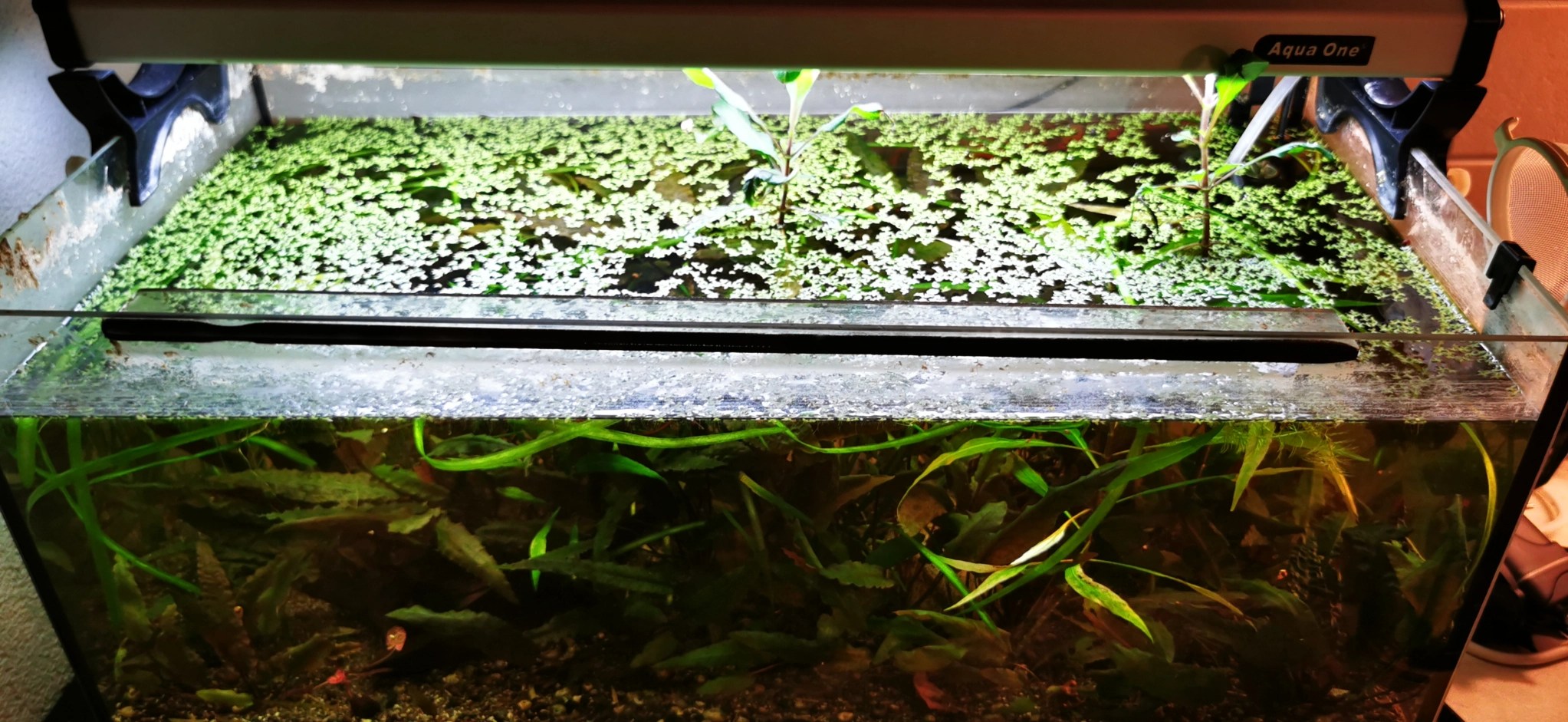
- Ein kleines Becken
- Wasser aus dem Mutterbecken
- Ausreichend Pflanzen
- Lebendfutter
- Schnecken
Mehr nicht. Es braucht keine Technik. Keine Bubbler. Keinen Filter. Kein CO2. Keine Technik.
Kleines Becken:
Die Babies sollten nicht zu viel schwimmen müssen, um ihr Futter zu finden. Ein kleines Becken ist zudem besser zu kontrollieren.
Wasser aus dem Mutterbecken:
Um die Babies nicht mit veränderten Wasserwerten zu schocken, nimmt man das Wasser mit den Babies aus dem Bruttank. Ein Einfahren des Beckens ist nicht nötig, da es keine Einflussfaktoren auf die Wasserqualität gibt. (Sand, Holz, Deko, Filter).
Ausreichend Pflanzen:
Pflanzen aus dem Brutbecken sorgen für ausreichend Sauerstoff. Ausserdem nehmen sie durch das Wachstum die Nährstoffe aus dem Becken, welche der Kot der Schnecken freisetzt.
Lebendfutter:
In meinem Fall verwende ich Artemia Nauplien. Diese werden in kleiner Menge in einer Zuchtflasche frisch angesetzt. Ausserdem haben Artemia den Vorteil ca. 12 Stunden in Süsswasser zu überleben. So haben die Babies den ganzen Tag Zeit zu fressen. Die toten nicht gefressenen Artemia werden durch die Schnecken entsorgt.
Schnecken:
All den Müll im Aquarium wird von den Schnecken gefressen. Sie toten Artemia Nauplien. Die toten Babies, die es nicht schaffen. So kann sich keine Fäulnis bilden, welche durch Bakterien das Wasser verseucht. Sie Ausscheidungen der Schnecken sind unschädlich und dienen den Pflanzen als Dünger.
English Version:
Baby fish are very sensitive to environmental influences in the first few days and weeks. The water must remain clean. The chemistry is constant. There must be enough oxygen in the water.
What does it take for this:
- A small pool
- Water from the mother tank
- Sufficient plants
- Live food
- Snails
Not more. No technology is required. No bubblers. No filter. No CO2. No technology.
Small pool:
The babies shouldn’t have to swim too much to find their food. A small tank is also easier to control.
Water from the mother tank:
In order not to shock the babies with changed water values, you take the water with the babies out of the breeding tank. It is not necessary to retract the pool as there are no factors influencing the water quality. (sand, wood, decoration, filter).
Sufficient plants:
Plants from the breeding tank provide sufficient oxygen. In addition, as they grow, they take the nutrients from the tank that the snails‘ droppings release.
Live food:
In my case I use Artemia nauplii. These are freshly prepared in small quantities in a breeding bottle. Artemia also have the advantage of surviving in fresh water for around 12 hours. This means the babies have all day to eat. The dead, uneaten Artemia are disposed of by the snails.
Snails:
All the garbage in the aquarium is eaten by the snails. They kill Artemia nauplii. The dead babies that don’t make it. This means no rot can form, which could contaminate the water with bacteria. The snail excretions are harmless and serve as fertilizer for the plants.


 Veröffentlicht von PeterPan